

 +86-20-8759-9901
 Views: 0 Author: Site Editor Publish Time: 2026-09-27 Origin: Site


Harsh cleansing agents strip away natural sebum during a routine shower. This chemical action leaves the outermost layer of the hair raised and severely tangled. The resulting microscopic chaos causes intense friction, making wet combing a frustrating and structurally damaging experience for the consumer.
Cosmetic chemists face a distinct challenge here. They must transform an aggressive wash into a smooth, restorative process. Specialized cationic polymers provide the exact chemical mechanism needed to solve this problem. In this technical guide, we will examine how these conditioning agents operate at a molecular level. We will explore the functional differences between popular variants and uncover why they are now indispensable for modern, high-performance hair care manufacturing.
Electrostatic Attraction: Wet, damaged keratin carries a strong negative charge. Positively charged cationic polymers bind directly to these compromised areas, smoothing the cuticle effectively.
Friction Reduction: These ingredients form a microscopic, water-soluble lubricating film on the hair shaft. This significantly reduces the mechanical friction that causes premature breakage during detangling.
Formulation Versatility: Specific polymer variants serve distinct functional purposes. Some stabilize rich lather in 2-in-1 systems, while others offer exceptional rheology modification for highly porous textures.
Silicone-Free Solutions: The personal care industry is rapidly shifting toward lightweight, clean-label formulations. Hydrophilic polymers successfully replace heavy silicones without weighing down fine hair.
To understand the necessity of conditioning agents, formulators must first examine the anatomical structure of human hair. The outermost layer of the shaft consists of overlapping keratin scales known as the cuticle. In a healthy, dry state, these scales lie perfectly flat. They are protected by a lipid barrier primarily composed of 18-MEA. However, the moment hair is exposed to water, the shaft absorbs moisture and swells rapidly. This swelling forces the protective scales to lift outward. The structural integrity of the strand is temporarily compromised, leaving the inner cortex highly susceptible to external mechanical stress.
The chemistry of a standard washing routine further complicates this vulnerable state. Keratin proteins possess an isoelectric point that leaves them with a net negative charge at a neutral pH. When strands suffer damage from UV exposure, daily heat styling, or aggressive chemical treatments, this anionic character intensifies dramatically. Furthermore, conventional shampoos rely heavily on anionic surfactants like Sodium Laureth Sulfate. Washing compromised hair with these negatively charged cleansers strips away remaining protective lipids. The shaft is left chemically bare and highly reactive.
This combination of raised cuticles and a stripped lipid barrier creates a remarkably high-friction environment. When a consumer attempts to drag a comb through unconditioned wet hair, the lifted scales of adjacent strands interlock. The mechanical force required to pull a tool through this resistance frequently exceeds the tensile strength of the swollen hair. Snapping, premature breakage, and split ends are the inevitable results. Mitigating this boundary friction is the paramount goal for R&D teams when designing a premium cleansing product.
In cosmetic chemistry, "Polyquaternium" serves as the standardized INCI designation for polycationic polymers utilized across the personal care industry. The terminology breaks down simply. "Poly" indicates a large molecule composed of repeating structural units. "Quaternium" refers to quaternary ammonium cations. These unique ammonium centers maintain a permanent positive charge regardless of the surrounding formula's pH level. Consequently, these ingredients act as positively charged conditioning agents explicitly designed to interact with the anionic surfaces of damaged keratin.
The true scientific ingenuity of incorporating these polymers into a cleansing system lies in a physical chemistry phenomenon known as coacervation. Formulators often refer to this as the dilution deposition mechanism. While sitting on the retail shelf, the positively charged polymer and the negatively charged cleansing surfactants exist in a delicately stabilized equilibrium. They remain transparent and do not separate.
However, the moment a consumer applies the product and introduces large volumes of rinse water, the formulation is rapidly diluted. This sudden influx of water shifts the micellar structure. The polymer becomes insoluble in the surfactant matrix. It precipitates out, forming a coacervate phase, and deposits directly onto the hair shaft even as the dirt and lather wash down the drain.
Achieving this precise coacervation threshold requires exact molecular weights and tightly controlled charge densities. Formulators cannot rely on low-grade raw materials. Impurities inevitably lead to formula instability, cloudiness, or poor deposition during consumer use. To guarantee consistent batch success, R&D teams consistently rely on a premium polyquaternium conditioner to achieve the perfect balance of cleansing efficacy and conditioning performance.
Heavy oils tend to coat the entire head indiscriminately. In contrast, the deposition of cationic polymers is highly targeted through a chemical process called substantivity. Damaged areas of the cuticle exhibit a much higher concentration of negative charges. The positively charged polymer acts like a localized microscopic magnet. It is electrostatically drawn directly to the sites of the most severe structural damage. This intelligent substantivity ensures the most vulnerable sections of the strand receive the highest concentration of repair.
Once firmly bound to the hair shaft, the polymer undergoes a structural alignment. It weaves a microscopic, weightless, and uniform film over the entire cuticle. Functioning as a boundary lubricant, this film flattens the jagged scales and creates a continuous surface. This lubricating layer drastically alters the tactile feel of the wet hair, providing what cosmetic chemists refer to as "slip." The hair strands can now glide past one another effortlessly.
The efficacy of this mechanism goes beyond subjective sensory evaluation. It is rigorously quantified in cosmetic testing laboratories. Researchers utilize specialized equipment, such as a Dia-Stron tensile tester, to measure the exact physical force required to pull a comb through a standardized hair tress. In controlled wet combing tests, formulas enhanced with a proper cationic polymer demonstrate a drastically reduced combing force. This empirical data, measured objectively in Joules of work, proves that mechanical friction is successfully mitigated.
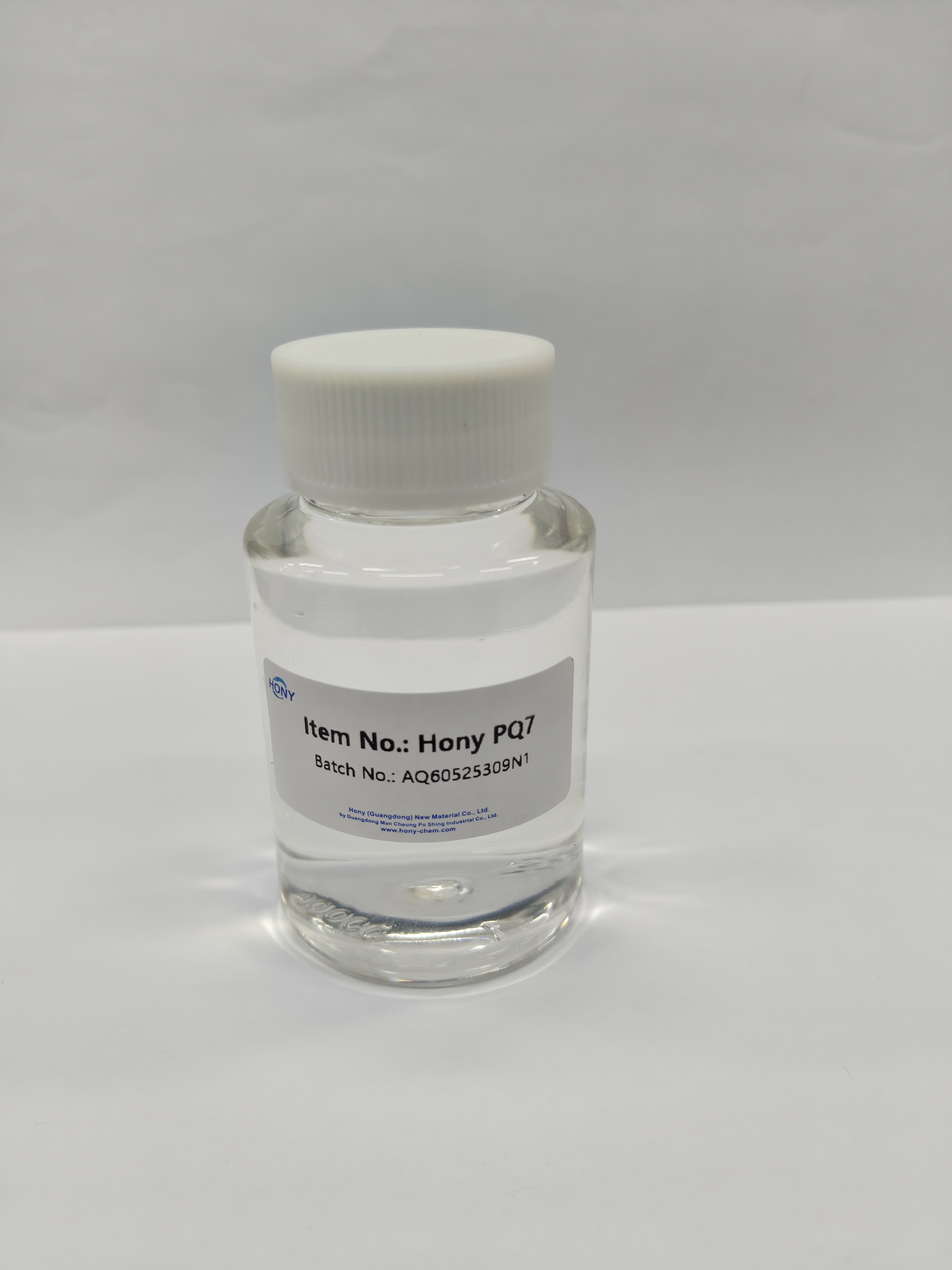
Among the vast array of options available, Polyquaternium-7 stands out as one of the most widely utilized conditioning agents globally. From a chemical standpoint, it is a highly stable, liquid synthetic copolymer composed of acrylamide and diallyldimethylammonium chloride. It delivers exceptional slip, robust detangling properties, and crystal-clear compatibility with a broad spectrum of surfactant systems. Supplied as an aqueous liquid with a solid content typically ranging from 8.5% to 9.5%, it is incredibly convenient for cold-process manufacturing.
A notorious historical challenge in formulating 2-in-1 systems is that traditional conditioning agents act as aggressive defoamers. Natural botanical oils suppress the formula's ability to generate bubbles, leading to a flat washing experience. Polyquaternium-7 bypasses this hurdle entirely. Due to its unique structural geometry, it actively stabilizes and enriches the lather structure. It interacts synergistically with anionic surfactants to create a dense, creamy foam profile.
Given its strong substantivity and lather-enhancing characteristics, this variant is predominantly used in daily-use hair care and opaque 2-in-1 formulas. For formulators looking to upgrade their product line's tactile profile without compromising cleansing power, sourcing a reliable polyquaternium-7 for shampoo ensures superior consumer satisfaction right out of the shower.
While synthetic copolymers are phenomenal for slip, certain formulations demand a natural structural backbone. Polyquaternium-10 is a polymeric quaternary ammonium salt of hydroxyethyl cellulose. Because it is derived directly from natural plant cellulose, its molecular architecture is highly compatible with human hair protein. Supplied as a granular powder, premium grades typically feature a precise nitrogen content between 1.5% and 2.2%, making it a staple in advanced salon-grade chemistry.
One of the most significant secondary benefits of this polymer is its exceptional rheology-modifying capability. Beyond conditioning the hair, it acts as a powerful thickening agent within aqueous surfactant systems. High-performance variants, such as the 30M grade, allow chemists to build luxurious viscosity without relying on excessively high levels of sodium chloride. This is particularly advantageous since high salt content can irritate the scalp and strip color-treated hair.
Fine hair presents a unique formulation paradox. It requires conditioning to prevent tangling, yet heavy ingredients will instantly weigh it down. Polyquaternium-10 neutralizes the negative static charges that cause flyaways in dry environments. Its breathable film preserves the hair's natural volume and bounce. To maintain clear formulations and predictable thickening curves, manufacturers must partner with a reputable polyquaternium-10 conditioning polymer supplier.
The global beauty market is currently undergoing a massive transformation. Educated consumers increasingly demand cleaner, more transparent ingredient lists. Recent market data indicates a sharp rise in search intent for terms like "weightless moisture" and "silicone-free hair care." Shoppers are actively avoiding ingredients they perceive as suffocating to the scalp or harmful to aquatic ecosystems. Regulatory bodies are also applying intense scrutiny regarding the biodegradability of cyclic silicones. This industry-wide pivot has placed immense pressure on formulators. They must deliver the immediate sensory gratification of traditional silicones but through a more sustainable chemical pathway.
Cationic polymers have emerged as the premier solution to this modern formulation challenge. Through targeted electrostatic attraction, they deliver the exact friction reduction required for painless detangling. The crucial difference lies in their solubility. Because they are hydrophilic and form a microscopic, breathable matrix rather than a heavy occlusive layer, they rinse away cleanly. The result is hair that is thoroughly detangled in the shower but remains bouncy and free of artificial coating once dried.
Formulation Feature | Traditional Silicones | Polyquaternium Polymers |
|---|---|---|
Wet Combing Force Reduction | High | High |
Water Solubility | Generally Low | High (Easily rinses away) |
Impact on Hair Volume | Frequently weighs down fine hair over time | Lightweight; preserves natural texture and bounce |
Lather Impact | Often depresses foam; requires chemical boosters | Stabilizes and enhances lather richness |
Consumer Label Appeal | Facing scrutiny in premium markets | Celebrated in "Silicone-Free" formulations |
As shoppers become increasingly engaged in ingredient analysis, a recurring debate surfaces on hair care forums. There is a persistent myth that all polyquats cause permanent, irreversible buildup. This misconception stems from confusing water-soluble polymers with non-soluble waxes. Brands must address this objectively through the lens of factual cosmetic chemistry.
Modern cosmetic-grade variants operate on a fundamental principle of equilibrium. Because the polymer is positively charged, it is attracted specifically to the negative sites of damaged hair. Once those compromised sites are neutralized and covered, the hair surface loses its strong magnetic pull. During subsequent washes, there is no longer an attraction for new molecules to bind to the already conditioned areas. The excess simply washes down the drain. Routine washing easily maintains this equilibrium, preventing long-term accumulation.
To maximize detangling benefits while entirely avoiding any heavy after-feel, strict dosage control is critical. Formulators should typically keep the active usage rate between 0.1% and 0.5% in a standard cleansing base. Overdosing the polymer wastes expensive raw materials and risks altering the sensory profile of the final product. Precise measurement during the manufacturing phase is the key to flawless performance.
When developing products targeted at consumers with fine or easily weighed-down hair, the primary objective is weightless detangling. Polyquaternium-10 is the superior choice for this demographic. Its cellulose-based structure provides excellent static control and drastically enhances wet combing without leaving a heavy residue.
Formulations aimed at highly textured or chemically bleached hair require maximum slip and intense moisture retention. Polyquaternium-7 is highly recommended here. Its liquid synthetic structure provides superior surface lubrication, exceptional curl definition, and supports the dense lather that consumers associate with deep moisturization.
Improving wet combing is a non-negotiable requirement for any successful modern shampoo. Without it, consumers are left with tangled hair and a frustrating shower experience. High-quality cationic polymers solve this problem elegantly through the science of electrostatic attraction. They reduce friction and prevent mechanical breakage. Whether utilizing Polyquaternium-7 for its lather-enhancing properties or Polyquaternium-10 for its weightless thickening capabilities, these ingredients are key to replacing heavy silicones. By carefully selecting the right grade, formulators can confidently create superior hair care products. We encourage R&D professionals to partner with a trusted manufacturer like Hony Chem to source pure, high-performing raw materials that meet the rigorous expectations of today's educated consumers.
Its primary purpose is to provide immediate conditioning, reduce static electricity, and significantly improve wet combing. It achieves this by depositing a protective, weightless lubricating layer on the hair shaft during the rinse phase. This prevents the mechanical damage caused by detangling wet hair.
Higher molecular weight polymers generally provide stronger film-forming properties and better viscosity building. However, if the molecular weight is excessively high, it may lead to a heavy tactile feel. Formulators must select the specific molecular grade based on the target hair type and desired sensory profile.
Yes. While they carry a positive charge, cosmetic-grade polyquaterniums are specifically engineered to remain stable in anionic systems like SLES during storage. Through the mechanism of coacervation, they only precipitate and deposit onto the hair when diluted with large amounts of water during the rinse phase.
Yes, it is highly beneficial for color-treated hair. By smoothing and temporarily sealing the lifted hair cuticle, it helps prevent artificial color molecules from leaching out too quickly during the aggressive washing process.
Polyquaternium-7 is a synthetic, liquid copolymer renowned for providing extreme slip and enhancing lather. Polyquaternium-10 is a plant-derived, cellulosic powder that offers weightless conditioning, excellent anti-static benefits, and acts as a natural viscosity builder for the liquid formula.
Absolutely. It is widely utilized as a core ingredient in silicone-free hair care lines. It successfully mimics the detangling and smoothing effects of traditional silicones without leaving a heavy, non-water-soluble residue that flattens the hair over time.
Yes, the cosmetic-grade variants most commonly used in hair cleansers are inherently water-soluble. This vital characteristic ensures they can be easily formulated into clear aqueous systems and helps prevent stubborn, long-term buildup.


