

 +86-20-8759-9901
Views: 0 Author: Site Editor Publish Time: 2026-10-20 Origin: Site


Ever opened a bottle of mineral SPF after months of storage, only to squeeze out a runny, translucent liquid followed by a gritty, unspreadable paste? For cosmetic formulators and product developers, this is a nightmare scenario. Heavy UV filters have a natural tendency to settle over time. This physical reality not only ruins the consumer sensory experience but fundamentally compromises the protective efficacy of the product.
To combat this relentless gravitational pull, chemists rely on a dedicated sunscreen stabilizer to prevent particle fallout. By establishing a robust internal architecture, these functional additives keep dense materials evenly suspended. They work seamlessly from the moment the emulsion cools on the manufacturing floor to the final application on a consumer's skin.
In this comprehensive guide, we will explore the underlying physical chemistry of sedimentation. We will unpack the specific ingredients that prevent it and detail actionable strategies to ensure your next suncare formulation remains flawless on the shelf.
Particle settling is a gravitational process affecting dense mineral UV filters. It leads to dangerous inconsistencies in SPF protection and unappealing textures.
A robust stabilization system works via a dual-action approach. It prevents individual particles from agglomerating while establishing a rheological network to hold them in place.
Implementing a polymeric dispersant provides steric hindrance. It coats mineral particles so they bounce off one another rather than forming heavy clumps.
Integrating a targeted elastomer thickener modifies the fluid rheology. This creates a yield stress that locks particles in a 3D web during storage while maintaining a non-greasy skin feel.
Avoiding routine manufacturing errors is critical for maximizing product shelf life. Inadequate high-shear milling or improper phase addition will ruin an otherwise perfect formula.
For research and development teams, mineral sunscreens present a unique set of physical chemistry hurdles. Unlike organic UV filters that dissolve seamlessly into the oil or water phase, physical filters like zinc oxide and titanium dioxide exist as solid, insoluble particulates. They must be suspended rather than dissolved.
To anticipate why these particles eventually fall to the bottom of a container, formulators look to Stokes Law. This foundational equation dictates the settling velocity of spherical particles suspended in a viscous fluid. In practical formulation terms, the speed at which a particle sinks is governed by three primary variables. First, larger particles fall exponentially faster because the radius is squared in the mathematical equation. Second, inorganic mineral filters are significantly denser than standard cosmetic carrier oils or water. Gravity constantly pulls these heavy oxides downward. Finally, a thinner continuous phase offers minimal resistance, allowing solid materials to drop rapidly.
When mineral powders are left uncoated or are poorly dispersed during the milling phase, they exhibit incredibly high surface energy. To naturally reduce this energy, individual particles attract one another. They magnetically bind to form larger clusters known as agglomerates. Because these clumps possess a much larger combined radius, their settling speed accelerates dramatically. This phenomenon explains why a poorly engineered emulsion can completely separate in a matter of weeks inside a hot warehouse.
Sedimentation goes far beyond mere aesthetic flaws. It is a critical safety and compliance issue. As particles settle, the top layer of the lotion becomes a watery fluid with drastically reduced UV protection. Meanwhile, the bottom layer turns into a hard, gritty cake of concentrated metal oxides. This sludge clogs pump mechanisms and refuses to spread evenly. Consequently, the consumer receives patchy, unreliable UV coverage, leading to severe sunburns and permanent damage to brand reputation.
Before diving into specific chemicals, it is crucial to understand the current market landscape. Over the past few years, consumer demand has aggressively shifted toward environmental responsibility. Regulatory bans on specific chemical filters have driven brands to formulate with unprecedented solid loadings. Today, it is common to see active zinc oxide levels exceeding 25 percent to achieve high SPF claims. This massive increase in solid particulates makes particle suspension the absolute number one technical hurdle for modern R&D teams. To counteract the relentless pull of gravity and the chemical attraction between particles, cosmetic chemists utilize specific functional ingredients engineered to maintain absolute homogeneity.
In the realm of cosmetic chemistry, a stabilizer is a specialized compound or a synergistic blend of materials. It maintains the uniform suspension of insoluble UV filters throughout the continuous phase. The primary objective is to guarantee structural integrity. A well-designed system ensures the formula withstands environmental stress factors like heat, vibration, and time.
Effective long-term stabilization rarely relies on a single chemical trick. Instead, it requires a dual-action approach that addresses both the micro-interactions of the particles and the macro-properties of the fluid.
Specifically, chemical dispersion involves cloaking the solid particles with a dispersing agent. This creates a microscopic physical barrier around each grain of zinc or titanium. When two coated particles drift toward one another, their coatings physically clash. They repel and bounce apart before they can fuse.
Furthermore, physical suspension involves thickening the external phase to construct a three-dimensional support matrix. Think of it as an invisible, microscopic scaffolding. It physically traps the dispersed particles and completely halts their downward trajectory.
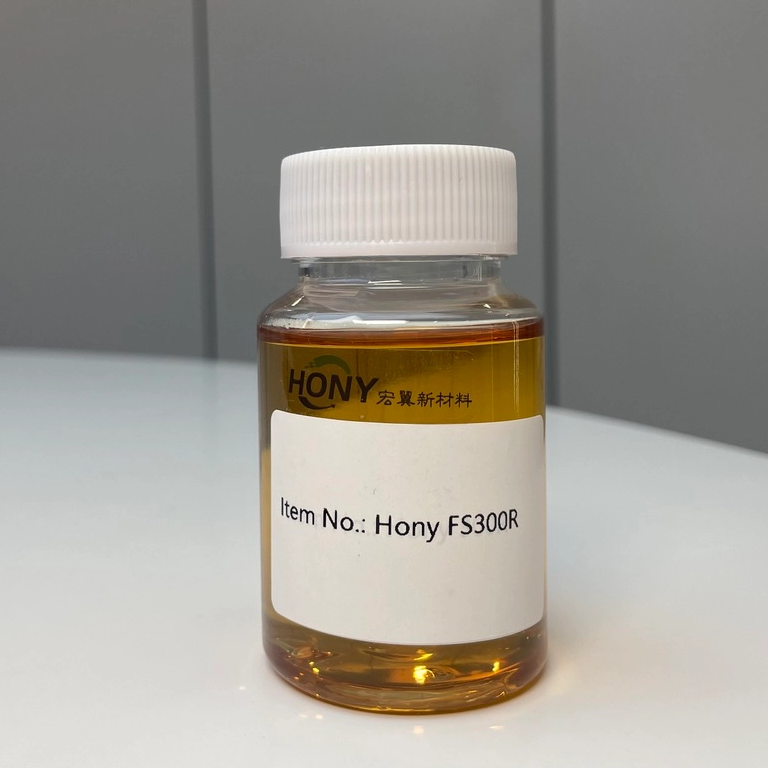
Achieving flawless chemical dispersion in high-SPF mineral suncare often hinges on the use of specialized polymeric esters.
Identified by CAS No 27924-99-8, this highly efficient, plant-derived polymeric dispersant has become an industry standard in modern mineral formulations. Sourced primarily from renewable castor oil, it boasts exceptional compatibility with a wide array of cosmetic carrier oils, alkanes, and synthetic esters. Its distinct molecular architecture makes it the premier candidate for wetting and coating dense metal oxides.
The core function of a polyhydroxystearic acid dispersant is to provide robust steric hindrance. The molecule is designed with a polar head that anchors itself tenaciously to the surface of the mineral particle. Simultaneously, its long, oil-soluble polymeric tail extends outward into the surrounding carrier fluid.
Picture two mineral particles drifting dangerously close to each other. As they approach, their extended polymeric tails compress. This compression generates a powerful repulsive force, acting much like opposing magnets. Because the actual mineral cores can never touch, agglomeration is entirely thwarted. This keeps the effective particle radius incredibly small and neutralizes one of the main drivers of rapid settling.
Beyond its stabilizing prowess, this dispersant offers massive manufacturing advantages. It drastically reduces the viscosity of the formulation during the high-friction milling process. This immediate viscosity drop allows chemists to formulate with exceptionally high loads of physical SPF filters. Formulators can easily exceed 40 percent in pre-dispersions without the mixture seizing up into an unworkable, chalky paste inside the processing vat.
While a premium dispersant successfully keeps particles separated, a rheology modifier is absolutely essential to hold those newly separated particles in place against the constant force of gravity.
A silicone elastomer sunscreen thickener functions as a highly sophisticated physical suspension agent. Utilizing premium blends like Cyclopentasiloxane and Dimethicone Crosspolymer, these crosslinked polymers swell dramatically when introduced to carrier fluids. They create a flexible, invisible, three-dimensional micro-sponge network within the emulsion. This intricate web physically catches the dispersed UV filters, suspending them evenly from the top of the bottle to the bottom.
The true genius of this particular thickener lies in its ability to impart yield stress to the fluid. Yield stress is the minimum amount of mechanical force required to make a resting fluid begin to flow.
In the context of warehouse storage, a high yield stress means the product behaves almost like a solid while sitting undisturbed on a shelf. It completely halts the downward migration of particles. However, the exact moment a consumer pumps the bottle or rubs the lotion onto their skin, the applied shear force causes the 3D network to temporarily yield. The sunscreen instantly transforms into a smooth, easily spreadable liquid, delivering a flawless user experience.
Historically, highly stabilized mineral sunblocks felt notoriously heavy, greasy, and occlusive. Silicone elastomers elegantly solve this sensory dilemma. By replacing traditional, heavy suspension waxes with an elastomer network, formulators can effectively mask the greasy feel of organic carrier oils. The end result is a highly stable, high-SPF product that leaves a desirable matte, powdery, and cosmetically elegant finish on the skin.
Even when utilizing premium raw materials, slight missteps on the laboratory bench or manufacturing floor can lead to catastrophic product failure. Product developers must meticulously avoid these frequent errors.
A dispersant can only coat the surface area that is actively exposed to it. If mineral powders are merely stirred into a liquid rather than properly milled, they will remain in tight, dry clumps. Stabilizers cannot penetrate the center of these agglomerates. Over time, these heavy, uncoated clumps will rapidly fall out of suspension, leaving a dense puck of sediment at the bottom of the packaging.
Cosmetic chemistry relies heavily on the precise sequence of operations. Introducing a stabilizer at the wrong processing temperature, or dumping it into the wrong phase, can instantly destroy its efficacy. For instance, polymeric dispersants must be intimately mixed with the carrier oil and the mineral powders long before the water phase is introduced. Failing to follow this protocol prevents the dispersant from properly anchoring to the particulates.
Attempting to cut costs by using too little dispersant is a critical error. The exact amount of dispersant required must be calculated based on the active surface area of the specific UV filter, not merely its total weight. If the ratio is too low, bare patches remain on the mineral particles. These bare patches will inevitably find each other, binding together to cause bridging flocculation and rapid sedimentation.
Selecting the appropriate stabilization system requires a deep analysis of the final product goals, target demographic, and regulatory requirements. Instead of guessing, formulators must map their ingredients to concrete performance standards.
The most resilient formulations do not rely on a single miracle ingredient. Combining a targeted dispersant with a reliable sunscreen stabilizer creates a powerful synergistic effect. This dual-action pairing provides a highly reliable, fail-safe architecture. It ensures long-term stability without compromising the skin feel or spreadability.
To make the selection process actionable, refer to the core comparison below. It outlines exactly when to deploy different stabilizing technologies based on your formulation needs.
Stabilizer Category | Primary Mechanism | Ideal Formulation Scenario | Key Engineering Benefit |
|---|---|---|---|
Polymeric Dispersants | Chemical Steric Repulsion | High-load mineral SPF exceeding 20 percent active solids. | Dramatically lowers milling viscosity; prevents hard caking. |
Silicone Elastomers | Physical Rheology Modification | Water-in-silicone emulsions requiring a matte finish. | Builds high yield stress; masks greasy carrier oils. |
Natural Wax Blends | Viscosity Building | 100 percent natural or clean beauty certifications. | Provides thermal stability in anhydrous balms and sticks. |
Proper ingredient selection is only half the battle. It must be paired with optimized manufacturing protocols to ensure commercial success when scaling from a small lab beaker to a massive production vat.
The best chemical stabilizers cannot compensate for inadequate mechanical mixing. Formulators must utilize high-shear rotor-stator homogenizers, three-roll mills, or specialized bead mills. This heavy-duty machinery applies the intense mechanical shear force necessary to physically rip apart raw mineral agglomerates. This allows the stabilizing agents to uniformly coat every single microscopic particle.
Because cosmetic brands cannot afford to wait three years to see if a product will settle, chemists rely on accelerated stability testing. By subjecting the sunscreen to extreme conditions, formulators can accurately predict the long-term viability of the suspension system before the product ever reaches the consumer market.
Test Method | Duration and Parameters | Purpose of the Test | Pass Criteria for Suspension |
|---|---|---|---|
Elevated Temperature | 4 to 12 weeks at 40°C, 45°C, and 50°C. | Simulates long-term aging and high-heat shipping conditions. | No visible liquid layer on top; no hard-packed sediment at the bottom. |
Freeze-Thaw Cycling | 3 to 5 cycles alternating between -10°C and 25°C. | Tests the structural resilience of the polymer network against expansion. | Formula returns to a homogenous state without permanent separation. |
Centrifuge Testing | 30 minutes at 3,000 to 5,000 RPM. | Applies multiplied gravitational force to instantly reveal settling risks. | No phase separation; particles remain evenly distributed. |
Preventing particle settling is a non-negotiable requirement for developing safe, effective, and commercially viable suncare products. When heavy mineral filters fall out of suspension, the entire formulation fails its primary directive. It leaves the consumer vulnerable to harmful UV radiation.
The science of sedimentation proves that gravity and particle agglomeration are constant, unrelenting threats. However, by deeply understanding these physical forces, cosmetic chemists can engineer robust, elegant solutions. The strategic combination of a high-quality stabilization system, a reliable plant-derived dispersant, and a sophisticated rheology modifier is the ultimate secret. This approach guarantees premium suncare products maintain their integrity from the first drop to the very last.
For product developers looking to elevate their next formulation, investing in advanced stabilization technology is the most direct path to achieving flawless texture, reliable SPF ratings, and lasting consumer trust. To find the exact chemical architecture for your next project, explore the high-performance ingredients available at Hony Chem and secure the stability your brand deserves.
A properly formulated sunscreen utilizing high-quality stabilizing agents should remain stable and uniform for two to three years at room temperature. Rigorous accelerated stability testing during the R&D phase ensures that the product maintains its structural integrity and provides consistent UV protection throughout its entire commercial shelf life.
While vigorous shaking can temporarily redistribute some loose particles in a watery formula, it cannot fix hard packing that has cemented at the bottom of the container. If a product has settled to this severe degree, the SPF protection will remain patchy and uneven upon application. This is exactly why a robust suspension network is required from the very beginning of the manufacturing process.
Yes, it is a highly tolerable, plant-derived ingredient. Because of its gentle profile and low irritation potential, it is frequently utilized as a dispersing agent in premium baby sunscreens, dermatological formulations, and daily-wear products specifically engineered for individuals with highly reactive skin barriers.
No, they do the exact opposite. While they are highly effective at suspending heavy mineral particles in the bottle, they provide a remarkably lightweight, breathable, and silky finish on the skin. Formulators specifically choose them to eliminate the greasy, chalky, or tacky sensory experience typically associated with traditional high-SPF physical sunblocks.
A dispersant works at the microscopic chemical level to coat individual mineral particles, preventing them from magnetically sticking together and forming heavy clumps. A thickener, conversely, modifies the macro-viscosity of the surrounding liquid phase to physically hold those separated particles up against the force of gravity. Both functions are vital, synergistic components of a complete and effective stabilization system.
High ambient temperatures reduce the viscosity of the continuous phase, making the carrier fluid thinner. If a formula relies solely on low-melting-point waxes, the heat will melt the structural network, completely destroying the yield stress. Upgrading to temperature-resistant elastomers or advanced polymeric networks prevents this thermal collapse.
Generally, yes. High-quality polymeric dispersants are highly effective at coating both zinc oxide and titanium dioxide. However, because titanium dioxide has a different surface area and density profile than zinc, you must recalculate the exact ratio of the dispersant required to ensure every particle is fully coated.


