

 +86-20-8759-9901
 Views: 0 Author: Site Editor Publish Time: 2026-09-25 Origin: Site


Wet hair is incredibly fragile. When you step out of the shower and try to comb through tangled strands, you are experiencing mechanical friction at its worst. Cleansing agents in shampoos strip away dirt and excess sebum. However, this process inherently raises the hair cuticle, creating microscopic friction points along the shaft. The result is rough, unmanageable hair that is highly prone to mechanical breakage.
To fix this instantly without leaving a greasy residue, cosmetic chemists rely on precisely engineered smoothing compounds. In this guide, you will discover how a well-formulated dimethicone emulsion safely restores slip, shine, and manageability. It bridges the critical gap between effective cleansing and luxurious, weightless conditioning.
A pre-blended, water-dispersible silicone variant provides exceptional conditioning without leaving heavy buildup.
It drastically improves post-wash smoothness by forming a microscopic, breathable film over the shaft to seal the cuticle.
Modified versions like amino-functional silicones offer targeted repair by utilizing positive charges to bind to damaged areas.
High-quality micro-emulsions allow engineers to create stable, clear 2-in-1 shampoos without compromising optical clarity.
Despite widespread internet myths, these polymers are recognized as safe, biologically inert, and non-comedogenic by dermatologists.
The personal care sector is currently experiencing a massive shift toward the skinification of hair. Consumers now demand high-performance repair formulas that feel entirely weightless. Furthermore, there is a growing preference for visually clear, minimalist product aesthetics. This market trend forces formulators to abandon heavy, outdated oils. Instead, the industry is rapidly adopting advanced micro-emulsions. These sub-micron technologies deliver elite conditioning while maintaining absolute optical clarity in modern cleansers.
To understand how modern haircare products achieve that coveted silky feeling, it is essential to look at the foundational chemistry of their ingredients.
Scientifically known as polydimethylsiloxane—often abbreviated as PDMS—dimethicone is a synthetic polymer renowned for its incredible lubricating and protective properties. Structurally, it consists of a flexible silicon-oxygen backbone paired with methyl groups. This unique chemical makeup makes pure silicone highly hydrophobic. It naturally repels water. While this water-repelling nature is fantastic for locking moisture into the hair strand and blocking out environmental humidity, it presents a massive challenge on the manufacturing floor. Pure silicone oil simply does not mix with water.
Because shampoos and conditioners are primarily water-based products, adding pure PDMS directly into a formula results in immediate separation. This is where the emulsification process becomes critical.
An emulsion is created by breaking down the raw oil into microscopic droplets. These micro-droplets are then suspended in a water base using specialized surfactants, which act as chemical bridges. One end attaches to the droplet, while the other end grabs onto the water. Consequently, this transformation turns a stubborn, hydrophobic oil into a highly cooperative, water-dispersible liquid. More importantly for daily routines, an emulsified format ensures the conditioning agent distributes evenly across your tresses during washing.
The transition from rough, wet hair to a smooth, manageable mane is a precise physical and chemical process.
When you wash your hair, anionic surfactants remove dirt. Simultaneously, the pH of the water and cleansers causes the outermost layer of overlapping cells—the cuticle—to lift. A lifted cuticle leaves the shaft negatively charged, highly porous, and physically rough to the touch.
Upon application, the micro-droplets coat the shaft with an incredibly thin layer. This film acts as a temporary sealant, flattening the scales back down. By smoothing the exterior, the strand can effectively lock in internal hydration while blocking out external environmental humidity. This is the primary scientific mechanism behind long-lasting frizz reduction.
Imagine trying to drag a fine-tooth comb through wet, bleached hair. The snapping sound you hear is mechanical damage in real-time. In cosmetic chemistry, slip refers to how easily strands glide past one another. Wet hair is highly fragile, and when cuticles are lifted, strands snag on each other.
The suspended micro-droplets act much like microscopic ball bearings between individual strands. By drastically lowering the friction coefficient, the hair experiences significantly less mechanical stress during both wet and dry combing. Ultimately, this friction reduction prevents snap breakage and split ends over time.
One of the most fascinating aspects of 2-in-1 cleansers is how they manage to clean and condition simultaneously. This relies on a chemical mechanism known as coacervation.
During the washing phase, the conditioning droplets remain suspended in the lather matrix. However, when you rinse your hair with water, the sudden dilution triggers a shift in the formula physical state. The polymers drop out of suspension and deposit smoothly onto the shaft, exactly as the dirt is washed down the drain. This precise timing ensures a frictionless feel without interfering with the actual cleaning.
While standard variants are excellent for general smoothing, cosmetic science has evolved to address specific types of structural damage.
Frequently listed on ingredient labels as amodimethicone, an amino functional dimethicone emulsion is a specialized, upgraded variant. In this structural modification, amino groups are added to the polymer chain. These groups carry a cationic—or positive—electrical charge, which fundamentally changes how the ingredient interacts with your hair.
The science behind this modified ingredient relies entirely on electrostatic interactions. Healthy, virgin hair has a relatively neutral or slightly negative charge. In contrast, damaged hair carries a very strong negative charge. Because the amino-variant carries a positive charge, it acts like a microscopic magnet. It is naturally drawn to the highly porous, broken sections that desperately need repair. It deposits heavily on these compromised areas while leaving a very light footprint on healthy roots.
To help visualize the application differences and select the right active ingredient for your formulation, consider this technical breakdown:
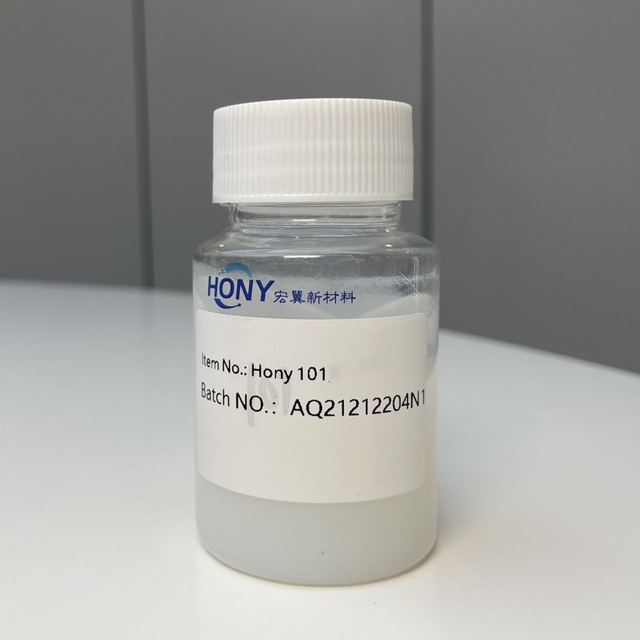
Specification | Standard Dimethicone Emulsion (e.g., Hony-101) | Amino-Functional Emulsion (e.g., Hony-150A) |
|---|---|---|
Ionic Charge | Non-ionic | Cationic / Weakly Cationic |
Target Hair Type | Normal to thick, coarse virgin hair | Color-treated, bleached, or heat-damaged hair |
Visual Appearance in Formula | Opaque or pearlescent | Optically clear / Transparent |
Primary Benefit | Intense overall lubrication and gloss | Targeted structural repair without root buildup |
Creating a stable mixture from raw oil requires high-shear mixing equipment, precise temperature controls, and immense energy consumption. By sourcing a pre-manufactured silicone emulsion for shampoo, formulators bypass these complex production hurdles entirely.
These stabilized ingredients can often be added during the cold-processing phase of manufacturing. This cold-processable nature saves significant energy costs, reduces production time, and guarantees that every batch maintains a uniform viscosity profile. High-quality standard emulsions provide a solid content of around 60%, offering robust and consistent conditioning for opaque formulas.
A major historical challenge in the industry has been creating 2-in-1 cleansers that are optically clear. Traditional macro-emulsions possess large particle sizes that scatter light, resulting in a milky or pearlescent appearance. Modern chemical engineering solves this through the development of micro-emulsions.
Advanced liquids feature droplet sizes so incredibly small—often under 40 nanometers—that they allow visible light to pass through them without scattering. This technological breakthrough allows chemists to create visually striking, crystal-clear formulas that still deliver elite post-wash smoothness.
Despite its widespread use and proven efficacy in reducing mechanical damage, this ingredient faces intense scrutiny on social media. To make informed decisions, it is crucial to separate objective dermatological data from internet rumors.
A prevalent misconception suggests that synthetic polymers are toxic or can suffocate the scalp. According to major safety databases, PDMS is highly stable, biologically inert, and non-toxic. From a molecular standpoint, these molecules are significantly too large to penetrate the human skin barrier. They simply rest on the surface, creating a breathable, protective film.
Many users report that over time, their hair begins to feel heavy or flat. This buildup was a genuine issue decades ago when heavy, non-water-soluble raw oils were applied directly to the hair. However, modern emulsified versions are specifically engineered to mitigate this. Because they are inherently water-dispersible, the surfactants allow them to rinse away cleanly. Any residual micro-film is easily removed by standard anionic cleansers during your next wash cycle.
For brand owners and B2B buyers, selecting the right raw materials is the most critical step in product development. The cosmetic market is highly competitive, and consumers will immediately notice if a product fails to provide adequate slip or feels sticky.
Not all raw materials are created equal. The effectiveness of the final product relies entirely on the quality of the emulsification process. If you are developing a pearlescent, deeply hydrating family shampoo, a standard non-ionic emulsion with a high active silicone content is ideal. Conversely, if your marketing focuses on clear, weightless repair for salon-treated hair, a cationic micro-emulsion with a sub-40nm particle size is mandatory. Partnering with a reliable supplier ensures strict particle size consistency, preventing unsightly oil separation on retail shelves.
Engineered smoothing polymers remain an indispensable tool for modern haircare formulation. They perfectly bridge the gap between effective cleansing and luxurious, weightless conditioning. With advanced options providing targeted repair for damaged cuticles, the benefits of friction reduction and shine far outweigh any debunked internet myths. To elevate your next product launch with premium, stable, and high-performing ingredients, evaluate your formula requirements and source the exact chemical match from Hony Chem to guarantee a frictionless experience for your consumers.
While pure raw dimethicone is strictly hydrophobic and not water-soluble, an emulsion is specifically designed to be water-dispersible. During the manufacturing process, surfactants are used to suspend microscopic droplets within a water base. This chemical structure means the ingredient mixes seamlessly into water-based formulas like shampoos. More importantly, it is significantly easier to wash out of the hair during a regular shower routine compared to heavy oils, greatly reducing the risk of unwanted buildup.
Standard dimethicone is a non-ionic polymer that provides an even, overall coating across the entire hair shaft, making it excellent for general smoothness and protecting thick or coarse hair. Amodimethicone is an amino-functional variant that has been chemically modified to carry a positive charge. Because damaged areas of the cuticle carry a negative charge, amodimethicone acts like a magnet. It specifically targets and clings to the highly damaged, porous areas for targeted repair while resisting deposition on healthy sections.
It will not make your hair flat if the product is formulated correctly and chosen according to your specific hair type. Modern cosmetic chemistry utilizes micro-emulsions that deposit an incredibly thin, microscopic layer over the cuticle. This layer smooths the rough edges of the shaft without adding heavy physical weight. Individuals with very fine or thin hair should intentionally look for products labeled as lightweight or volumizing, as these contain specifically calibrated, lower concentrations of conditioning agents to preserve bounce.
Yes, it is widely considered safe for sensitive skin. According to extensive medical, toxicological, and dermatological research, it is highly inert, hypoallergenic, and non-comedogenic. It does not react with the skin, nor does it clog pores. In fact, it is frequently used as the primary active ingredient in medical creams designed to soothe and protect irritated or broken skin. Any irritation experienced from haircare products is usually caused by fragrances, harsh preservatives, or improper rinsing.
Absolutely. While older, traditional polymers would turn a formula cloudy or opaque, advanced chemical processing has created specialized micro-emulsions. In these specific formulas, the droplets are engineered to be so small that they do not scatter visible light. This technological advancement allows cosmetic formulators to create aesthetically pleasing, crystal-clear cleansers that do not compromise on performance.
Particle size is the deciding factor in optical clarity. Macro-emulsions have larger droplets that reflect and scatter visible light, creating an opaque, milky, or pearlescent look. Micro-emulsions possess ultra-fine droplets—typically under 40 nanometers—that allow light to pass through uninterrupted. Formulators must choose sub-micron variants to achieve transparent final products.
Yes, one of the primary advantages of purchasing pre-emulsified ingredients is their compatibility with cold processing. Because the high-shear emulsification has already been completed by the raw material supplier, you can blend these liquids directly into your formula at room temperature. This significantly saves energy costs and reduces batch processing time while ensuring consistent stability.


