

 +86-20-8759-9901
 Views: 0 Author: Site Editor Publish Time: 2026-08-26 Origin: Site


Consumer demand in hair care has shifted aggressively toward weightless hydration, exposing the limitations of traditional macro-emulsions and heavy silicone-based serums that cause buildup or weigh down fine hair. Product developers and cosmetic chemists face a persistent trade-off: delivering high-performance lipid conditioning without compromising the formulation's sensory profile, stability, or visual appeal. Bridging the gap between water-based hydration and oil-based sealing requires advanced delivery systems. Integrating an Ultramicro Oil Emulsion offers a scientifically validated pathway to achieve deep penetration, high stability, and a clean sensory finish in both serums and leave-in treatments.
Traditional macro-emulsions and neat oils sit directly on the cuticle layer. They provide immediate friction reduction but cause long-term moisture blockages. Users frequently report sensory heaviness after repeated applications. The hair strand becomes coated in a thick lipid layer that attracts environmental dust and pollutants. This accumulation dulls the hair's natural shine and limits volume, particularly in fine or low-porosity hair types.
Incorporating high percentages of beneficial oils into water-based leave-ins carries significant stability risks. Phase separation remains a constant threat on the stability shelf. Formulators traditionally rely on heavy surfactant loads to stabilize these mixtures. Solubilizers like PEG-40 Hydrogenated Castor Oil or Polysorbate 20 are often required at ratios of 3:1 or 4:1 to the oil phase. High surfactant concentrations irritate the scalp, strip away natural sebum, and degrade artificial hair color prematurely. They also create an undesirable foaming effect when the consumer applies the leave-in product to damp hair.
Cyclomethicone and dimethicone effectively provide immediate shine and slip. Yet, the silicone dilemma persists across the personal care industry. These synthetic compounds face increasing regulatory scrutiny globally, with specific restrictions on D4 and D5 cyclic silicones in European markets. Consumers push back against their environmental persistence. Silicones often require harsh anionic clarifying shampoos for complete removal. This creates a damaging cycle of stripping and recoating the hair shaft, which degrades the F-layer and lifts the cuticle over time.
Sub-micron droplet architecture distinguishes ultramicro emulsions from standard macro-emulsions and microemulsions. Droplet sizes typically fall below 100 nanometers. This precise sizing alters the thermodynamic profile of the formulation. The internal phase disperses so finely that it defies standard gravitational separation. Brownian motion keeps the tiny droplets suspended indefinitely, preventing the coalescence and creaming seen in bulk oil mixtures.
Optical clarity improves dramatically at this scale. The droplet size is smaller than the wavelength of visible light (which ranges from 400 to 700 nanometers). Light passes through the emulsion rather than scattering, minimizing the Tyndall effect. This allows formulators to create transparent or highly translucent serum formulations. Consumers associate clear products with purity and weightlessness. Achieving this aesthetic without relying on volatile alcohols or pure silicones provides a distinct market advantage.
Kinetic stability increases significantly. These advanced mixtures resist flocculation and Ostwald ripening. Standard macro-emulsions degrade over time as droplets collide, merge, and eventually separate into distinct oil and water phases. Ultramicro droplets remain suspended uniformly throughout the product's lifecycle. This enhanced stability extends the shelf-life of the final product and ensures consistent performance from the first pump to the last.
| Emulsion Type | Average Droplet Size | Visual Appearance | Thermodynamic Stability | Typical Surfactant Load |
|---|---|---|---|---|
| Macro-emulsion | > 1000 nm | Opaque / Milky | Low (Prone to creaming) | Low to Medium |
| Microemulsion | 100 - 1000 nm | Translucent / Cloudy | Moderate | Very High |
| Ultramicro Emulsion | < 100 nm | Transparent / Clear | Extremely High | Optimized / Low |
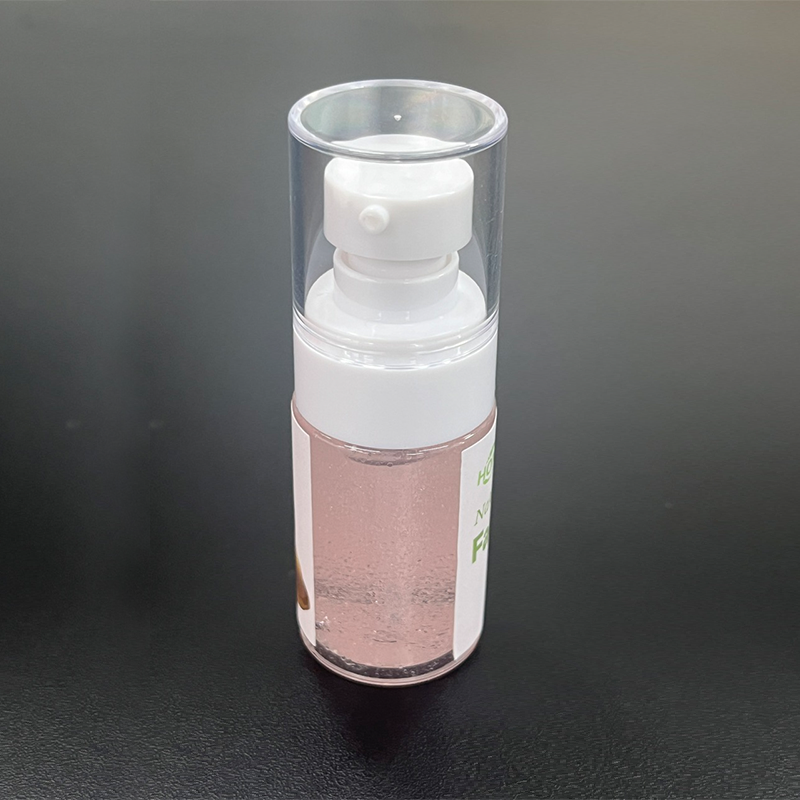
Connecting the sub-micron delivery system to specific consumer outcomes requires precise formulation on the bench. The primary goal is a zero-residue finish. Users expect enhanced combability and immediate sensory softness without drag. Formulating a lightweight moisturizing oil emulsion achieves this by ensuring rapid absorption. The tiny droplets lower the contact angle of the liquid on the hair fiber. They spread instantly upon contact and do not pool or clump in localized areas.
Evaporation and spreading dynamics change entirely at the sub-micron scale. The emulsion distributes lipids evenly along the hair shaft. Traditional oils often leave heavy patches where the consumer initially applies the product. Ultramicro systems glide effortlessly. The continuous water phase evaporates cleanly, leaving a microscopic, uniform lipid layer. This mimics the hair's natural 18-MEA protective barrier without adding excess weight or altering the hair's natural movement.
Optimizing consumer dosage becomes easier. High glide and a superior spreading coefficient mean less product is required per use. A minimal, dime-sized application provides comprehensive coverage for medium-length hair. This maximizes product yield and prevents user error. Consumers frequently over-apply traditional serums, leading to limp, greasy hair that requires immediate re-washing. The high spreading coefficient of ultramicro systems mitigates this risk entirely.
Ultramicro droplets possess the unique ability to penetrate the F-layer of the hair cuticle. They do not merely coat the surface like high molecular weight waxes or heavy mineral oils. This intercalation strengthens the hair structure from within. The small particle size allows lipids to navigate the overlapping cuticle scales. Once inside, they restore internal flexibility and improve the structural integrity of the cortex without expanding the hair shaft excessively.
These emulsions lock in hydration applied by water-based precursors. They act as an effective sealant, avoiding the occlusive weight of heavy butters. This process manages transepidermal water loss (TEWL) equivalents for hair. Moisture remains trapped beneath the breathable lipid seal. The hair stays hydrated throughout the day, even in low-humidity environments. The seal remains flexible, allowing the hair to bend without snapping.
Tailoring penetration capabilities supports highly porous, color-treated, or damaged hair. Chemical processing lifts and damages the cuticle layer, stripping away the natural lipid barrier. Ultramicro droplets fill these microscopic gaps. They reduce inter-fiber friction, preventing further mechanical damage during wet combing. They achieve this repair without the greasy accumulation typical of traditional restorative oils.
Cold-process manufacturing saves significant energy during production. Pre-emulsified ultramicro bases do not require high-heat phases. Large-scale production becomes faster and more efficient on the manufacturing floor. Eliminating the heating and cooling cycles in a 3000-gallon compounding tank reduces the overall carbon footprint of the manufacturing process. It also protects heat-sensitive botanical extracts, volatile essential oils, and vitamins included in the formulation.
These emulsions align perfectly with modern clean beauty standards. Formulators can achieve compatibility with PEG-free and sulfate-free mandates dictated by major retailers. The raw materials used to create the sub-micron droplets are often readily biodegradable. This compliance allows brands to market high-performance serums that meet strict environmental and safety guidelines. It removes the reliance on synthetic polymers and controversial ethoxylated emulsifiers.
Pairing ultramicro emulsions with cationic conditioning agents requires technical precision. Behentrimonium chloride, cetrimonium chloride, and stearamidopropyl dimethylamine are common in leave-ins. The emulsion must maintain stability in the presence of these positively charged ions. If the zeta potential of the emulsion clashes with the cationic charge, the system will crash. Proper selection of rheology modifiers prevents destabilization. Formulators must ensure the polymeric network supports the sub-micron droplets without causing agglomeration.
Strategic layering efficacy makes the emulsion the ultimate healthy hair sealant. It locks in hydration when applied to pre-moisturized hair. The cuticle remains receptive immediately after washing. Applying the emulsion at this stage maximizes penetration. It serves as an ideal primer before applying heavier cosmetic styling products. The hair remains protected from the drying effects of styling gels, mousses, or thermal protectant sprays.
| Ingredient Class | Compatibility Risk | Formulation Notes |
|---|---|---|
| Cationic Surfactants (e.g., Behentrimonium Chloride) | Moderate | Ensure the ultramicro emulsion is non-ionic or slightly cationic. Monitor zeta potential closely. |
| Anionic Rheology Modifiers (e.g., Carbomer) | High | Avoid. Anionic polymers will react with cationic conditioning agents and destabilize the emulsion. |
| Non-ionic Thickeners (e.g., Hydroxyethylcellulose) | Low | Highly recommended. Builds viscosity without disrupting the delicate emulsion interface. |
| High-Proof Alcohols (e.g., Ethanol) | High | Can strip the surfactant interface of the sub-micron droplets, leading to rapid coalescence. |
The skinification of hair care drives new formulation strategies. Consumers now treat their scalps with the same care as their faces, recognizing that healthy hair growth starts at the follicle. Facial-grade encapsulation adapts well for scalp serums and root-targeted leave-ins. These technologies allow for the controlled release of active ingredients. They bridge the gap between traditional hair styling and advanced dermatological care.
Targeted active delivery protects volatile or sensitive ingredients. Antioxidants, copper peptides, and essential oils degrade quickly when exposed to air, light, or incompatible formulation phases. Encapsulating them within a skin care oil bead emollient maintains their potency. The actives remain stable within the formula until the exact moment of application. This ensures maximum efficacy upon delivery to the scalp barrier.
Mechanical activation leverages consumer application habits. Users naturally rub products between their hands before application. This friction mechanically ruptures the oil beads. It ensures an even, activated distribution across the scalp and hair shaft. The visual cue of the beads dissolving also enhances the consumer experience. It provides immediate, tactile feedback that the active ingredients are working and absorbing into the skin.
Manufacturing risks include emulsion inversion or droplet coalescence. Improper shear rates during final mixing phases cause these critical failures. Ultramicro systems possess a delicate thermodynamic balance. Subjecting them to excessive mechanical force via high-speed rotor-stator homogenizers can destroy the sub-micron architecture. The droplets collide, merge, and eventually separate into distinct oil and water phases, ruining the batch.
Mitigation strategies require strict order-of-addition protocols. Temperature controls must be established for R&D and scale-up teams. The emulsion should typically be added during the final cool-down phase under low-shear sweep agitation. Propeller speeds must be carefully calibrated. Scale-up from the bench to the pilot plant requires precise mapping of shear rates to ensure the physical properties remain consistent across different tank geometries.
Material costs for specialized ultramicro emulsions run higher than bulk carrier oils. They also cost more than standard, mass-market silicones like dimethicone. The advanced processing required to achieve sub-micron droplet sizes adds to the raw material price. Formulators must balance this initial cost against the performance benefits. Budget constraints often dictate the inclusion percentage within the final formula, usually ranging from 2% to 10% depending on the desired conditioning level.
Value influencing factors justify the return on investment. Formulations need fewer secondary emulsifiers and solubilizers. Active inclusion rates drop due to higher efficacy and better delivery mechanisms. The final product achieves premium market positioning. Brands can command higher retail prices based on clean-beauty claims and superior sensory performance. The reduction in manufacturing energy costs also offsets the higher raw material price over large production runs.
Low viscosity impacts packaging choices significantly. Fine mist sprayers behave differently than standard pump dispensers. A formulation containing an ultramicro oil emulsion generally flows very well, often presenting as water-thin. If combined with certain rheology modifiers, the spray pattern may alter. It can stream rather than mist, leading to uneven application on the hair and consumer dissatisfaction.
Formulators must analyze the risk of nozzle clogging. While sub-micron droplets themselves do not clog, the interaction with other polymers might form films inside the actuator orifice upon drying. Specific valve designs require rigorous testing. Dip tube compatibility must also be verified to ensure the emulsion does not degrade or swell the plastic over the product's shelf life.
Tress testing protocols measure combing force reduction accurately. Laboratories use miniature tensile testers, such as the Dia-Stron, to quantify the exact force required to comb through treated hair. They also quantify shine enhancement using glossmeters on flat hair arrays. Anti-frizz performance is evaluated in high-humidity chambers (typically 80% to 90% relative humidity) over 24 to 48 hours. Standardized methods ensure repeatable, objective data that supports marketing claims.
Consumer perception metrics evaluate weightlessness claims. Blind sensory panels establish baselines for residue-free performance. Participants compare the new formulation against established silicone benchmarks. They rate attributes such as stickiness, spreadability, wet combing ease, and post-dry feel. These subjective metrics determine whether the technical achievements translate into a product consumers actually enjoy using daily.
Thermal and freeze-thaw testing ensures structural integrity. The emulsion must maintain optical clarity over a 24-month shelf life. Stress tests identify potential separation early in the development cycle. Samples are subjected to extreme temperature fluctuations. They cycle between freezing (-20°C) and elevated temperatures (45°C to 50°C). Any haziness, creaming, or phase separation indicates a failed stability protocol and requires reformulation.
Preservative efficacy requires specific microbial challenge testing. High-water, low-surfactant emulsion systems present unique preservation challenges. The massive interfacial surface area of sub-micron droplets can sometimes partition preservatives into the oil phase. This leaves the continuous water phase vulnerable to microbial growth. Formulators must select broad-spectrum preservative systems that remain active in the aqueous phase and verify them through USP 51 Antimicrobial Effectiveness Testing (AET).
A: A macro-emulsion has droplet sizes larger than 1000 nanometers, appearing milky and opaque. It is thermodynamically unstable and prone to separation over time. An ultramicro oil emulsion features droplet sizes under 100 nanometers. It appears transparent or highly translucent and possesses extremely high kinetic stability, resisting separation indefinitely.
A: Yes. They mimic the slip, spreadability, and weightless feel of synthetic silicones. By providing a clean-beauty-compliant mechanism for frizz reduction and cuticle sealing, they serve as highly effective, biodegradable alternatives to cyclomethicone and dimethicone without causing long-term buildup.
A: No. Pre-emulsified ultramicro bases are designed for cold-process manufacturing. They should be incorporated into the water phase using low-shear sweep agitation. High-shear mixing via rotor-stator homogenizers can actually damage the sub-micron droplet architecture and cause irreversible phase separation.
A: It encapsulates volatile or sensitive active ingredients, protecting them from degradation in the formula. When the consumer rubs the product between their hands or applies it to the scalp, mechanical friction ruptures the beads. This delivers a fresh, targeted dose of actives directly to the application site.
A: Yes, but they require careful formulation. They can be paired with common cationic agents like behentrimonium chloride. Formulators must monitor the zeta potential, maintain the correct pH, and select compatible non-ionic rheology modifiers to prevent agglomeration and ensure long-term stability.
A: Due to their high glide and exceptional spreading coefficient, a minimal amount is needed. A dime-sized application is typically sufficient for medium-length hair. This prevents over-application, maximizes product yield, and ensures a completely weightless, zero-residue finish.


