 +86-20-8759-9901
Views: 0 Author: Site Editor Publish Time: 2026-10-16 Origin: Site


Do consumers love the shine in your shampoo? Raw silicone oils often cause formula separation and cloudiness. This single issue can turn a promising laboratory prototype into a production nightmare on the factory floor. A pre-emulsified system solves this complex physical chemistry problem. It allows cosmetic chemists to deliver the exact slip, gloss, and conditioning effects that buyers demand without compromising batch stability. Formulating a stable hair care product requires more than just a good recipe. It demands strict process control. Let us break down the exact shop-floor conditions needed to integrate these polymers perfectly.
Temperature is crucial: Dispersions must be incorporated during the cool-down phase below 45°C to prevent thermal degradation of the surfactant system and subsequent batch separation.
Mind the shear: High-shear homogenizers can physically strip the protective emulsifier layer around the droplets. Gentle sweep mixing is strictly required.
Order of addition dictates performance: Integrating these ingredients at the very end of the formulation process ensures maximum stability and optimal deposition onto the hair shaft.
Match the polymer to the need: Standard dimethicone provides excellent daily conditioning. Amine-functionalized versions offer targeted repair for compromised cuticles.
Quality sourcing matters: Partnering with an experienced wholesale supplier guarantees consistent median droplet size. This metric is paramount for formula compatibility and aesthetic clarity.
Recent market analyses and search trends reveal a significant shift in formulation strategies. A few years ago, the clean beauty movement aggressively pushed for complete removal of synthetic polymers. Formulators attempted to replace them entirely with plant oils and synthetic esters. However, R&D teams quickly realized a hard engineering truth. Botanical oils simply cannot replicate the exceptional thermal protection, wet-combing friction reduction, and high refractive index of engineered siloxanes. Plant oils tend to weigh hair down and oxidize over time, leading to rancidity issues.
Consequently, the personal care industry is witnessing a robust resurgence in the demand for highly specialized, functionalized polymers. Modern consumers want weightless hydration and immediate repair without heavy build-up. To meet this demand, brands are moving away from raw, heavy fluids and embracing micro-emulsions and amino-modified variants. These advanced materials deliver immediate, perceivable consumer benefits while maintaining the lightweight feel required for fine or thinning hair.
To formulate high-performing hair care products, R&D professionals must first understand the fundamental mechanics of their raw materials. Raw polydimethylsiloxane is inherently hydrophobic. It repels water entirely. Because modern shampoos and conditioners are primarily aqueous systems, attempting to mix raw silicone directly into a batch is chemically counterproductive. It leads to immediate phase separation. You will simply end up with a highly unappealing oil slick at the top of the compounding tank.
This is where a high-quality silicone emulsion becomes indispensable. An emulsion is a thermodynamically unstable but kinetically stable system where the oil is dispersed into microscopic droplets within a continuous water phase. These droplets are kept suspended and separated by a carefully balanced matrix of surfactants. The emulsifiers feature a lipophilic tail that attaches to the siloxane and a hydrophilic head that interacts with the water. This creates a protective micelle.
Ultimately, the main objective of using these pre-dispersed systems in hair care is deposition. Deposition refers to the highly engineered process where droplets successfully transfer from the suspended product matrix onto the keratin surface of the hair shaft during the washing and rinsing phases. Achieving this requires a precise phenomenon known as coacervation. When cationic polymers and anionic surfactants form a complex upon dilution with shower water, they trap the active droplets and anchor them to the hair. If the dispersion is compromised during manufacturing, this deposition mechanism fails entirely.
Maximizing the conditioning benefits of these ingredients requires strict adherence to specific manufacturing parameters. Development teams must control the physical and chemical environment of the mixing tank to preserve the integrity of the suspended droplets.
Thermodynamics play a pivotal role in formulation stability. Heat is the primary enemy of pre-formed emulsions. Picture standing on the manufacturing floor, watching a large batch of premium conditioner suddenly turn into a stringy, separated mess simply because the cooling jacket was not engaged in time. When the temperature of a batch is too high, the kinetic energy within the system increases rapidly. This excess energy causes the microscopic droplets to collide with immense force. Eventually, they overcome the repulsive barriers provided by the surfactants.
As a non-negotiable rule of formulation, you must always add the dispersion during the cool-down phase. The batch temperature should ideally drop below 45°C before integration. If added to a hot water phase or during the high-temperature melting of solid fatty alcohols, the mixture will undergo coalescence. The droplets will merge into larger drops, breaking the system entirely and resulting in significant material waste.
In cosmetic manufacturing, shear refers to the mechanical stress applied to a fluid during mixing. High-shear mixing is necessary to hydrate gums or emulsify primary oil-in-water phases. Conversely, it is highly detrimental to pre-emulsified siloxanes. These ingredients are mechanically fragile. High-shear homogenizers, such as rotor-stator mixers, generate intense physical forces that can literally strip away the emulsifiers protecting the active droplets. Once the surfactant layer is compromised, the unprotected oil will agglomerate.
Best protocols dictate using gentle, low-shear agitation. Sweep blades, anchor stirrers, or simple propeller mixers operating at low RPMs should be utilized to fold the ingredient into the final batch. The goal is homogeneous distribution without mechanical disruption.
The sequencing of ingredients in a cosmetic batch is just as critical as the ingredients themselves. Dispersions should almost always be one of the final components added to the compounding tank.
Specifically in a typical shampoo formulation, the primary surfactants like Sodium Laureth Sulfate and secondary surfactants like Cocamidopropyl Betaine must be fully hydrated and mixed first. Any suspending agents, such as Acrylates Copolymer or cationic guars, must be fully neutralized and expanded. Adding the conditioning component too early can cause the droplets to become trapped in unintended surfactant micelles. This premature interaction prevents the active material from participating in the coacervate formation during consumer use. The expensive conditioning agent will simply wash down the drain.
Once the fundamental processing conditions are strictly controlled, the next critical decision is selecting the appropriate polymer architecture. Choosing the wrong variant can lead to heavy build-up, suppressed foaming, or a complete lack of conditioning efficacy. Formulators must align the chemical properties of the raw material with the specific end-goal of the consumer product.
Dimethicone remains the undisputed gold standard in the personal care industry for providing slip, reducing wet-combing friction, and imparting a high-gloss finish. When formulating a classic 2-in-1 conditioning wash, introducing raw fluid is notoriously difficult due to its high hydrophobicity. It tends to suppress the lather of anionic cleansers and can easily separate if the suspending agents are not perfectly calibrated.
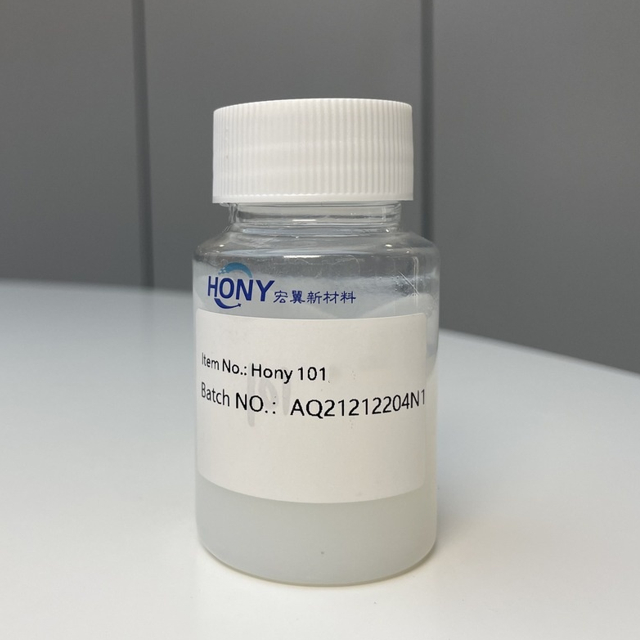
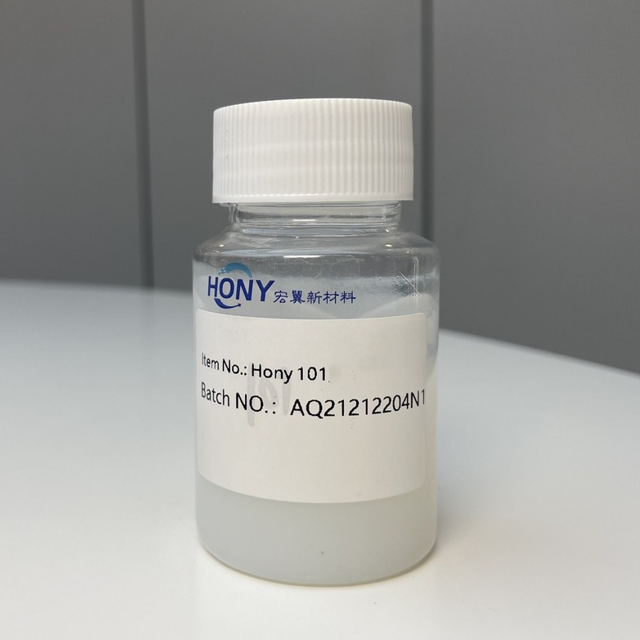
To circumvent these formulation hurdles, utilizing a pre-emulsified dimethicone emulsion for shampoo is highly recommended. High-quality variations like Hony-101 are meticulously designed with specialized non-ionic surfactant systems and feature an active silicone content of around 60%. This ensures the raw material remains fully compatible with primary cleansing agents. The optimized large-to-medium droplet size ensures that the polymer deposits evenly onto the cuticle during the rinsing phase without depressing the foam volume.
While standard polymers provide excellent surface-level conditioning, chemically treated, bleached, or heat-damaged hair requires a more sophisticated intervention. When the cuticle layer is damaged through chemical processing, the surface of the hair develops a higher density of negative electrical charges.
By introducing amine groups into the polymer chain, the molecule becomes protonated in slightly acidic environments. This grants it a positive charge. Because opposites attract, an amino silicone emulsion for damaged hair naturally gravitates toward and binds tightly to the most compromised, negatively charged areas of the hair fiber. Products like Hony-150A are engineered as micro-emulsions. Their ultra-fine droplet size not only provides deep targeted repair but also allows formulators to create optically clear, transparent shampoos without the milky cloudiness associated with standard macro-emulsions.
Feature | Standard Dimethicone (e.g., Hony-101) | Amino Silicone Micro-emulsion (e.g., Hony-150A) |
|---|---|---|
Primary Function | General conditioning, gloss, wet-combing slip | Targeted repair, color protection, thermal defense |
Particle Size | Macro-emulsion (Milky/Opaque) | Micro-emulsion (Transparent/Clear) |
Ionic Charge | Non-ionic / Slightly Anionic | Cationic (Positive charge) |
Best Application | 2-in-1 Opaque Shampoos, Daily Conditioners | Clear Shampoos, Deep Repair Masks, Leave-in Serums |
Even with premium raw materials, development teams frequently encounter physical chemistry challenges during the scale-up from laboratory bench to manufacturing floor. Understanding the root causes of these instabilities is essential for rapid troubleshooting.
One of the most common failures is macroscopic separation. This is often observed as a white, cloudy layer floating at the top of the batch. According to Stokes' Law, this is driven by differences in specific gravity between the oil and the continuous water phase. In a stabilized formula, separation is usually triggered by process abuse. If the batch is subjected to temperatures exceeding 45°C or intense homogenization, the protective layer surrounding the droplets is stripped away. Strict adherence to low-temperature, low-shear, late-stage addition is the definitive preventative measure.
Formulators often observe a sudden, frustrating drop in the viscosity of a shampoo base immediately after adding the dispersion. This occurs because the surfactants used to stabilize the raw emulsion can interact with the micellar structure of the shampoo's primary surfactant system. It effectively shifts the salt-curve of the formulation. To recover the lost viscosity, formulators should incrementally adjust the sodium chloride levels or incorporate non-ionic polymeric thickeners. Ingredients like PEG-150 Distearate are far less sensitive to surfactant disruption.
The ultimate success of a hair care formulation relies just as much on supply chain integrity as it does on chemical theory. Not all raw materials are manufactured to the same rigorous standards. The stability, performance, and safety of your final consumer product depend entirely on the quality of the raw materials you source.
When evaluating a wholesale supplier, chemical consistency is paramount. A reputable B2B manufacturer will provide tight specification limits for non-volatile content, pH, and droplet size distribution. If a supplier's batch-to-batch droplet size fluctuates, your final shampoo could be perfectly stable one month and separate entirely the next. Having access to comprehensive technical data sheets and direct guidance from the supplier's internal chemists can drastically reduce a brand's research and development timeline.
Ready to optimize your next formulation? Ensure batch-to-batch consistency and superior conditioning performance by sourcing engineered polymers directly from industry experts. Visit Hony Chem to explore a complete portfolio of high-performance raw materials tailored for your specific manufacturing needs.
It should always be incorporated during the cool-down phase of your manufacturing process. Wait until the main batch temperature has dropped below 45°C. Introducing these pre-emulsified ingredients at higher temperatures will thermally degrade the protective surfactants, causing the formula to break and separate in the final product.
The optimal choice is a dimethicone variant engineered with a non-ionic or slightly anionic surfactant system. This ensures the raw material will not suppress the foaming action or lather profile of your primary cleansing agents, while still depositing a sufficient layer to provide excellent wet-combing slip and friction reduction.
Chemically damaged or bleached hair carries a high density of negative electrical charges. Amino variants are chemically modified with amine groups that carry a positive cationic charge. This allows them to specifically target, attract to, and tightly bind with the most damaged areas of the hair cuticle, offering superior, long-lasting repair.
No, high-shear mixing must be strictly avoided. Prolonged homogenization or high-RPM agitation physically tears the emulsifiers away from the microscopic active droplets. Without this protective layer, the droplets will coalesce and cause formula instability. Always use a gentle, low-shear sweeping agitation to fold the ingredient into the batch.
It depends entirely on the particle size of the chosen raw material. Standard macro-emulsions have large droplets that scatter light, turning a clear formula milky or opaque. If you require a visually transparent shampoo, you must specifically source a micro-emulsion. Micro-emulsions feature droplet sizes small enough to allow light to pass through unimpeded.
Stability is typically verified through accelerated aging tests in a laboratory incubator. Formulators place the finished shampoo in a temperature-controlled oven at 45°C to 50°C for 4 to 12 weeks. Additionally, freeze-thaw cycle testing is conducted. If the product remains homogeneous without a cloudy layer forming at the top, the emulsion is properly stabilized within the surfactant matrix.
Usage rates depend heavily on the active concentration of the raw material and the desired end result. For standard daily shampoos, an addition rate of 1% to 3% is typical. For heavy-duty hair masks or deep conditioners designed for severely damaged hair, formulators may increase the dosage to 4% to 8% to ensure maximum deposition and repair.